Get In Touch

“Knowing a tactic is theory. Executing it under pressure is skill.”

— The Negotiation Club


Negotiation Tactics & Techniques.


50+ Practical Negotiation Tactics — Explained Clearly and Designed for Real-World Use

How To Use This Page


Below you will find a growing collection of negotiation tactics and techniques.

Each tactic includes:

  • A clear explanation of what it is
  • When it is typically used
  • Risks or common misapplications
  • A link to a deeper practical guide

You can explore them individually, or use them as part of a structured development pathway.

If you are new to negotiation, start with foundational tactics such as questioning techniques, silence, summarising and conditional trades.

If you are experienced, focus on refining execution and recognising the subtle moments where tactical discipline makes the difference.

Start Here With 6 Foundational Negotiation Tactics

If you are new to practising negotiation tactics, begin with these six. They form the foundation of disciplined negotiation and are used in almost every structured negotiation environment.

1. Open Questions

Open questions encourage explanation rather than yes-or-no answers. They uncover information, reveal interests and reduce assumptions. Strong negotiators rely heavily on open questions to understand the other party before moving to proposals.

Read the full guide to the Open Questions negotiation tactic.


2. Closed Questions

Closed questions create clarity and control. Used deliberately, they confirm understanding, test commitment and narrow options. While open questions explore, closed questions refine.

Read the full guide to the Closed Questions negotiation tactic.


3. Summarise

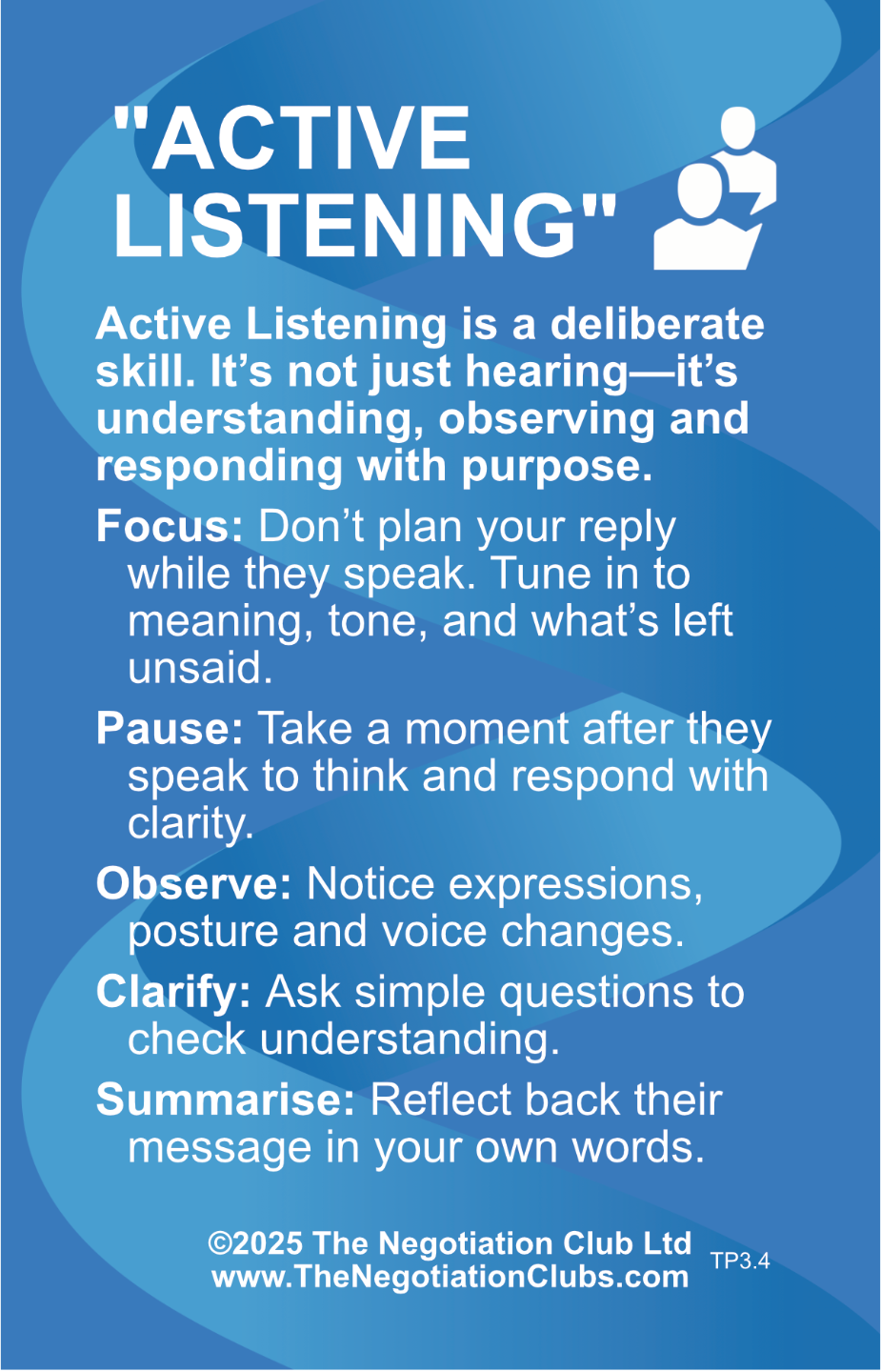
Summarising ensures alignment and demonstrates active listening. It clarifies understanding, corrects misinterpretations and improves decision-making. It is one of the most under-practised negotiation skills.

Read the full guide to the Summarising negotiation tactic.

4. Pause, Consider, Respond

This tactic builds tactical discipline. Instead of reacting immediately, you pause, process and respond deliberately. It reduces emotional reactions and improves judgement in high-pressure moments.

Read the full guide to the Pause, Consider, Respond negotiation tactic.


5. If You… Then We…

Conditional proposals create structured movement. Rather than making unilateral concessions, this tactic links value to reciprocity. It protects your position while encouraging progress.

Read the full guide to the If You… Then We… negotiation tactic.


6. Odd Numbers

Using odd numbers in proposals increases perceived precision and credibility. Rather than offering £10,000, you might propose £9,850. This subtle adjustment signals calculation and intention, making the figure feel less arbitrary and more considered.

Read the full guide to the Odd Numbers negotiation tactic.

What Are Negotiation Tactics?

Negotiation tactics are specific, intentional actions used during a negotiation to influence the discussion and move it towards agreement.

They are different from strategy.

Strategy is your overall plan.

Tactics are the moment-by-moment decisions you make within that plan.

For example:

  • Asking a calibrated question
  • Remaining silent after making a proposal
  • Using a conditional trade (“If you… then we…”)
  • Repeating a position consistently (Broken Record)

These are tactical choices made in real time.

When used well, they create clarity, movement and leverage. When used poorly, they can damage trust or stall progress.

That is why execution matters.


Why Negotiation Tactics Must Be Practised ... Not Memorised


Many professionals read about negotiation tactics. Very few practise them deliberately.

Knowing that silence is powerful is not the same as being able to hold silence under pressure. Knowing that anchoring influences perception is not the same as deploying it appropriately.

Tactics operate in micro-moments:

  • Immediately after asking a question
  • Immediately after making a proposal
  • When facing resistance
  • When sensing hesitation
  • When a deal is close

The difference between competence and hesitation often lies in repetition and structured practice.

At The Negotiation Club, negotiation tactics are designed to be practised through structured exercises, variable-based scenarios and observer feedback... not simply understood in theory.


1. Five Core Communication & Listening Tactics

These are the most practised negotiation tactics and form the foundation of effective execution. When questioning and listening are precise, the rest of the negotiation becomes significantly easier.


Open Questions

Open questions are a foundational negotiation tactic used to encourage explanation rather than yes-or-no responses. They typically begin with words such as how, what, when or why, and are designed to uncover interests, priorities and constraints.

During a negotiation, open questions slow the conversation down and reduce assumptions. They create space for the other party to reveal information that may not surface through closed questioning. Skilled negotiators use them early in discussions to understand context before moving to proposals.

When to use:

At the start of a negotiation or whenever you need to explore motives, interests or underlying concerns.

Risk of misuse:

Overusing open questions without direction can make you appear unfocused or evasive.

Read the full guide to the OPEN QUESTIONS negotiation tactic.

Closed Questions

Closed questions are a negotiation tactic used to confirm information, narrow options and test commitment. They typically produce short, specific answers such as “yes”, “no” or a precise figure.

In negotiation, closed questions create control and clarity. They are particularly effective after open questioning has revealed broader context. Used strategically, they refine understanding and reduce ambiguity before agreement is reached.

When to use:

When confirming understanding, testing boundaries or clarifying commitment.

Risk of misuse:

Excessive closed questioning can feel interrogative and may restrict useful dialogue.

Read the full guide to the CLOSED QUESTIONS negotiation tactic.

Summaries 

Summarising is a negotiation tactic used to restate key points in your own words to confirm alignment and demonstrate active listening. It ensures both parties share the same understanding before progressing.

In negotiation, summaries operate in critical micro-moments — after complex discussion, before proposals or when tension increases. They help correct misunderstandings and subtly influence framing.

When to use: 

After significant discussion or before moving to the next stage of negotiation.

Risk of misuse:

Poorly delivered summaries can distort meaning or appear manipulative.

Read the full guide to the SUMMARIES negotiation tactic.

Mirroring 

Mirroring is a negotiation tactic that involves repeating or subtly reflecting key words used by the other party. It encourages elaboration and demonstrates attentiveness.

When used correctly, mirroring prompts the other party to expand on their statement without direct challenge. It can surface additional information or reveal underlying reasoning.

When to use:

After the other party makes a statement worth exploring further.

Risk of misuse:

Overuse or obvious repetition can feel artificial and damage rapport.

Read the full guide to the MIRROR WORDS negotiation tactic.

TED Questions

TED questions (Tell, Explain, Describe) are a structured negotiation tactic used to encourage detailed responses. They promote depth rather than brevity.

In negotiation, TED questioning expands context and reduces superficial answers. It is especially effective when exploring interests or motivations.

When to use:

When you need detailed explanation rather than confirmation.

Risk of misuse:

Overuse may slow progress unnecessarily in time-sensitive negotiations.

Read the full guide to the TED QUESTIONS negotiation tactic.

Pause, Consider, Respond 

Pause, Consider, Respond is a negotiation tactic designed to prevent reactive decision-making. Rather than responding immediately to a proposal, challenge or emotional trigger, you deliberately create space before replying.

In negotiation, many mistakes occur in micro-moments where speed overrides judgement. This tactic introduces discipline. By pausing, you allow emotion to settle, assess implications and choose a controlled response rather than an impulsive one.

When to use:

Immediately after receiving a proposal, objection or unexpected statement.

Risk of misuse:

Overly long pauses without explanation can create unnecessary tension or appear evasive.

Read the full guide to the PAUSE, CONSIDER & RESPOND negotiation tactic.

Patience 

Patience is a negotiation tactic rooted in emotional discipline and long-term positioning. It prevents premature concession and reduces anxiety-driven decisions.

In negotiation, impatience often signals hidden urgency and weakens leverage. Practising patience strengthens composure and protects strategic timing.

When to use: 

When waiting for information, counter-proposals or emotional recalibration.

Risk of misuse: 

Passive waiting without strategic intent can stall progress unnecessarily.

Read the full guide to the PATIENCE negotiation tactic.

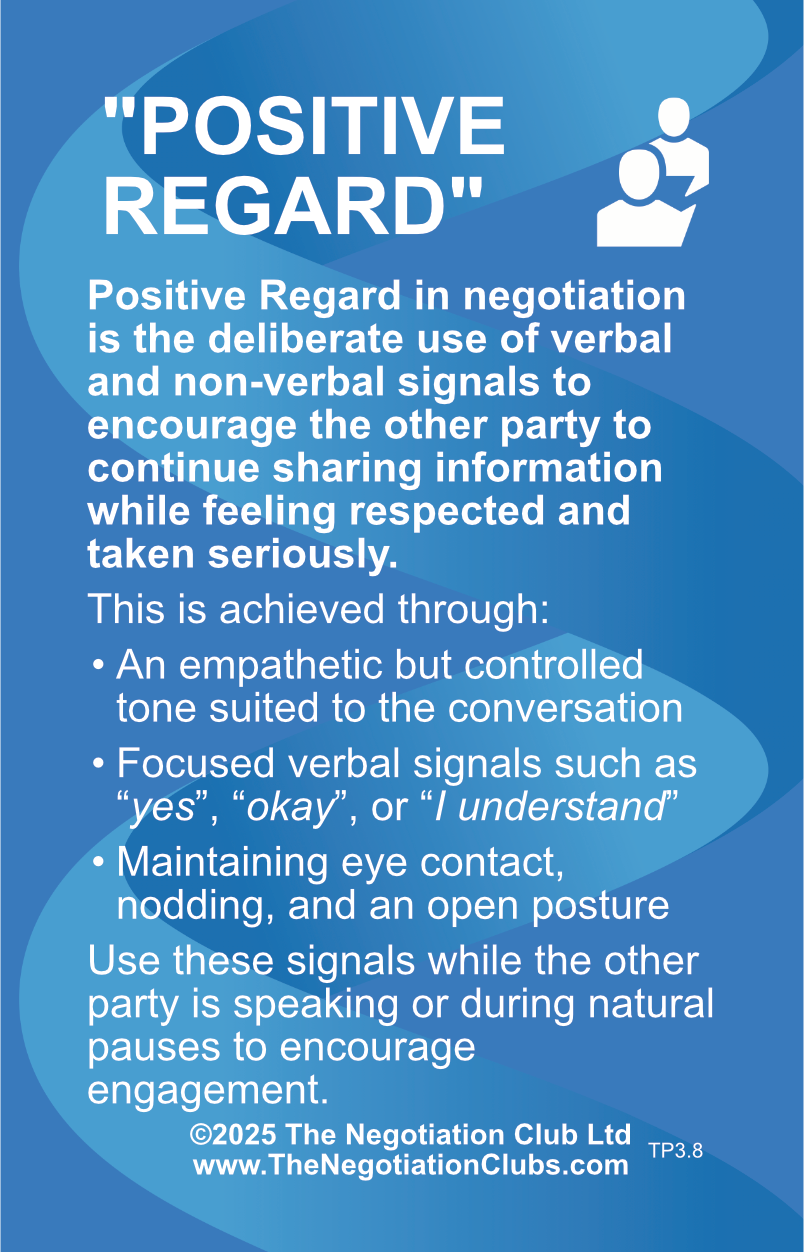
Positive Regard 

Positive Regard is a negotiation tactic that assumes constructive intent unless proven otherwise. It reduces defensive posture and supports collaborative dialogue.

In negotiation, perceived hostility often escalates conflict. Maintaining positive regard improves rapport and protects professional tone.

When to use: 

When discussions become tense or misunderstandings occur.

Risk of misuse: 

Uncritical optimism may lead to overlooking genuine risk signals.

Read the full guide to the POSITIVE REGARDS negotiation tactic.
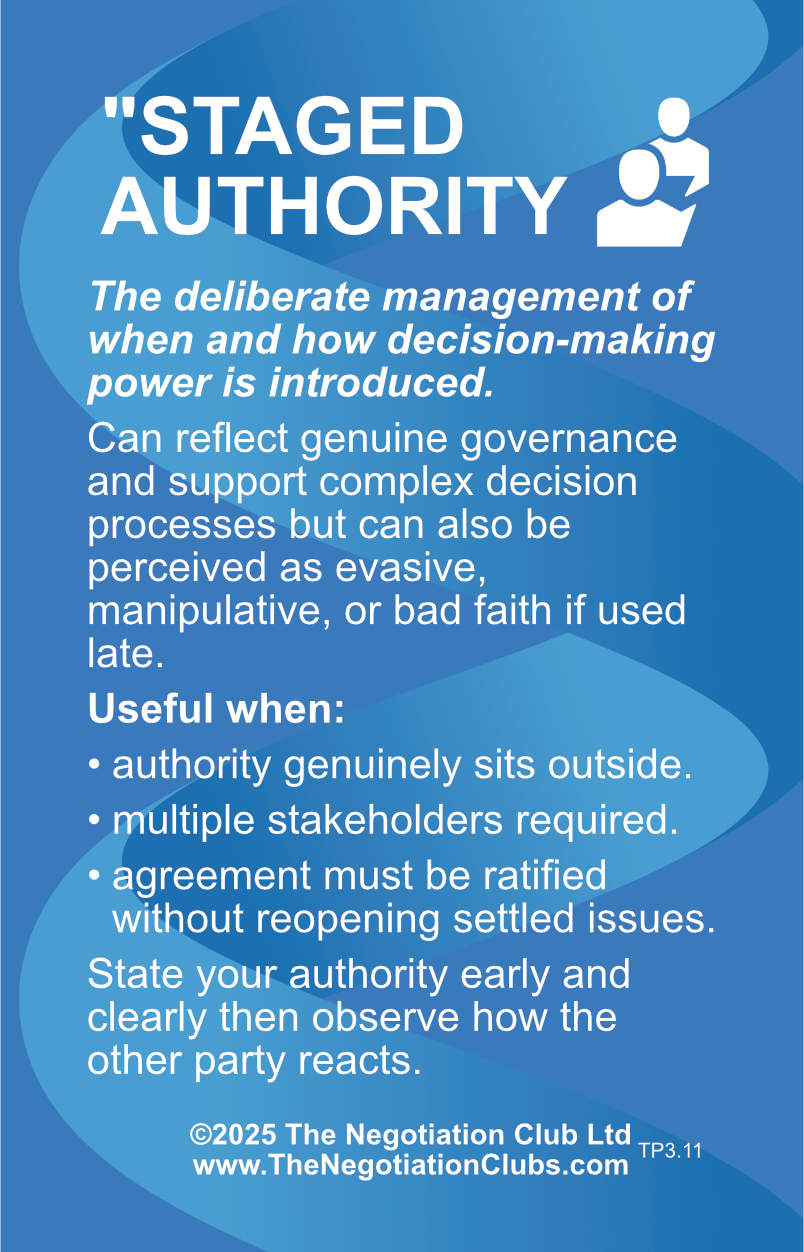
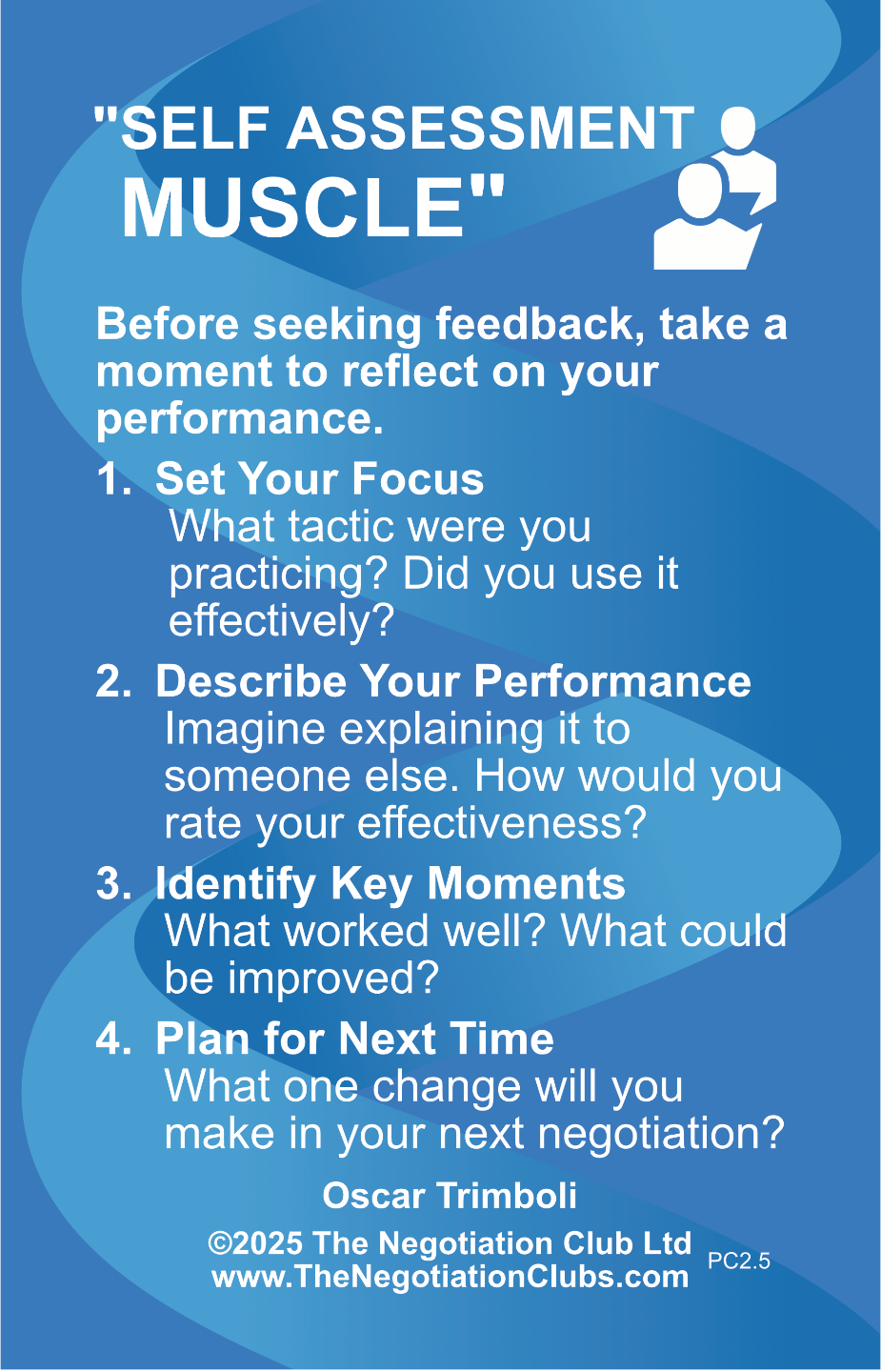
Negotiation Tactic Card – Self Assessment

Self Assessment 

Self Assessment is a preparatory negotiation tactic used to evaluate strengths, weaknesses and behavioural tendencies before entering discussion.

In negotiation, awareness of your default reactions and pressure points improves performance consistency. It reduces vulnerability to emotional triggers.

When to use: 

Before negotiation begins and during structured reflection.

Risk of misuse: 

Excessive introspection without action can delay preparation.

Read the full guide to the SELF ASSESSMENT negotiation tactic.

Over 50 Negotiation Tactics to Practice.

"The truth: Knowledge without practice is of no value." - Olga Neufeld (Club Member)

We use a growing selection of negotiation tactics to practice at The Negotiation Club.

More are being added each week as they are discussed at The Negotiation Club Podcast.

WARWICK Negotiation Club

30 day FREE trial. Cancel when you want. PRACTICE makes you GREAT!

£48.00 GBP every month

STUDENT Negotiation Club

PRACTICE with us because EMPLOYEES want SKILLED graduates!

£9.99 GBP every month

GOLD Negotiation Club

Tactics ALWAYS take PRACTICE... JOIN our club and try them NOW!

£44.00 GBP every month
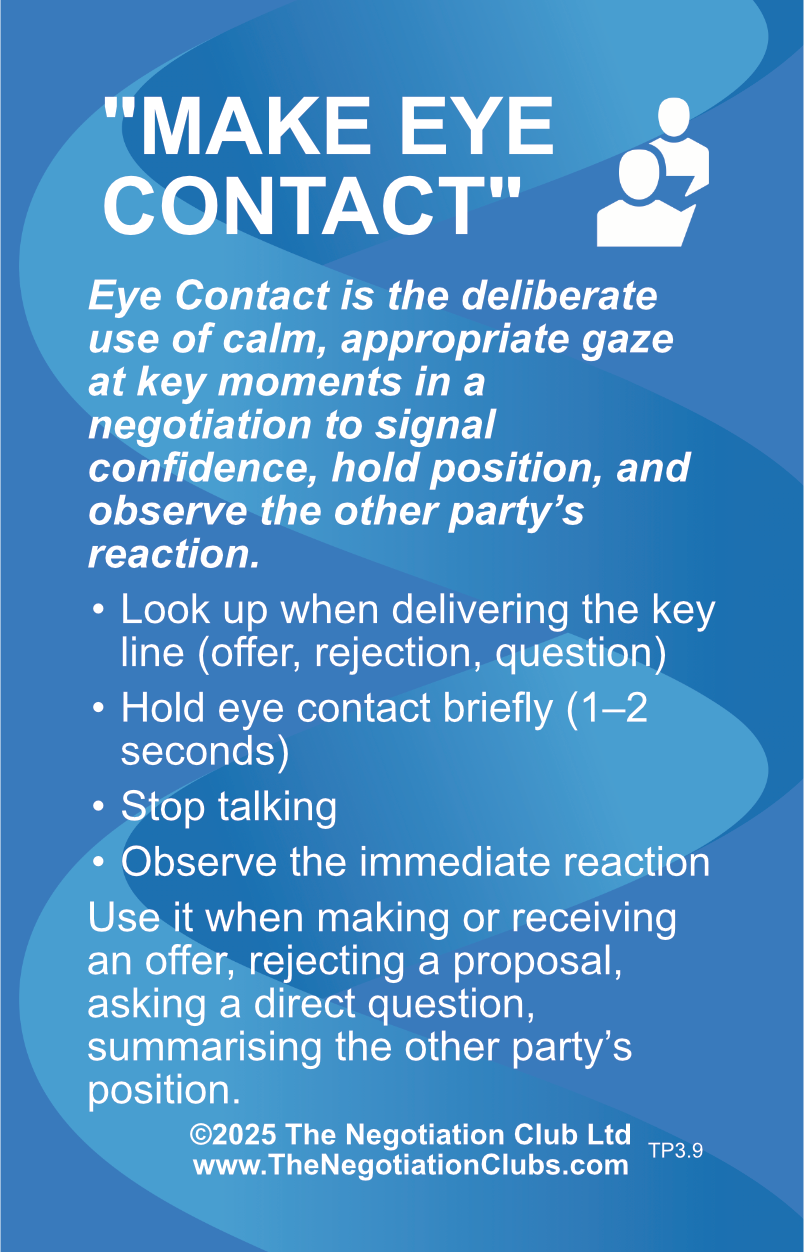
Negotiator holding calm eye contact after delivering an offer and pausing
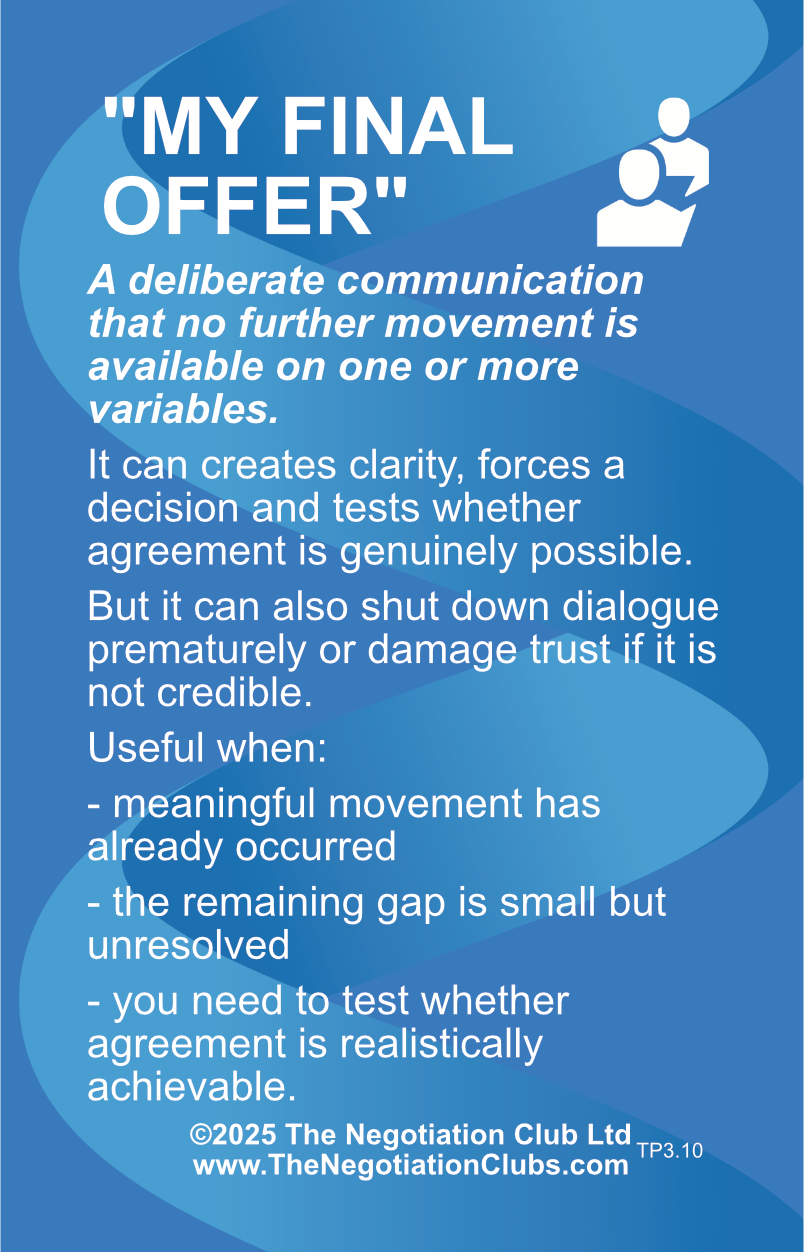
A negotiation tactic card that describes using Take It or Leave It statements as a tactic in a negotiation
A negotiation tactic card that describes using a Reality Testing statements as a tactic in a negotiation
A negotiation tactic card that describes Deflecting a Question as a tactic in a negotiation
A negotiation tactic card that describes Red Herring as a tactic in a negotiation
A negotiation tactic card that describes Soft Language as a tactic in a negotiation
A negotiation tactic card that describes Seeking Out Rejection as a tactic in a negotiation

The Negotiation Club Podcast Negotiation Cards 

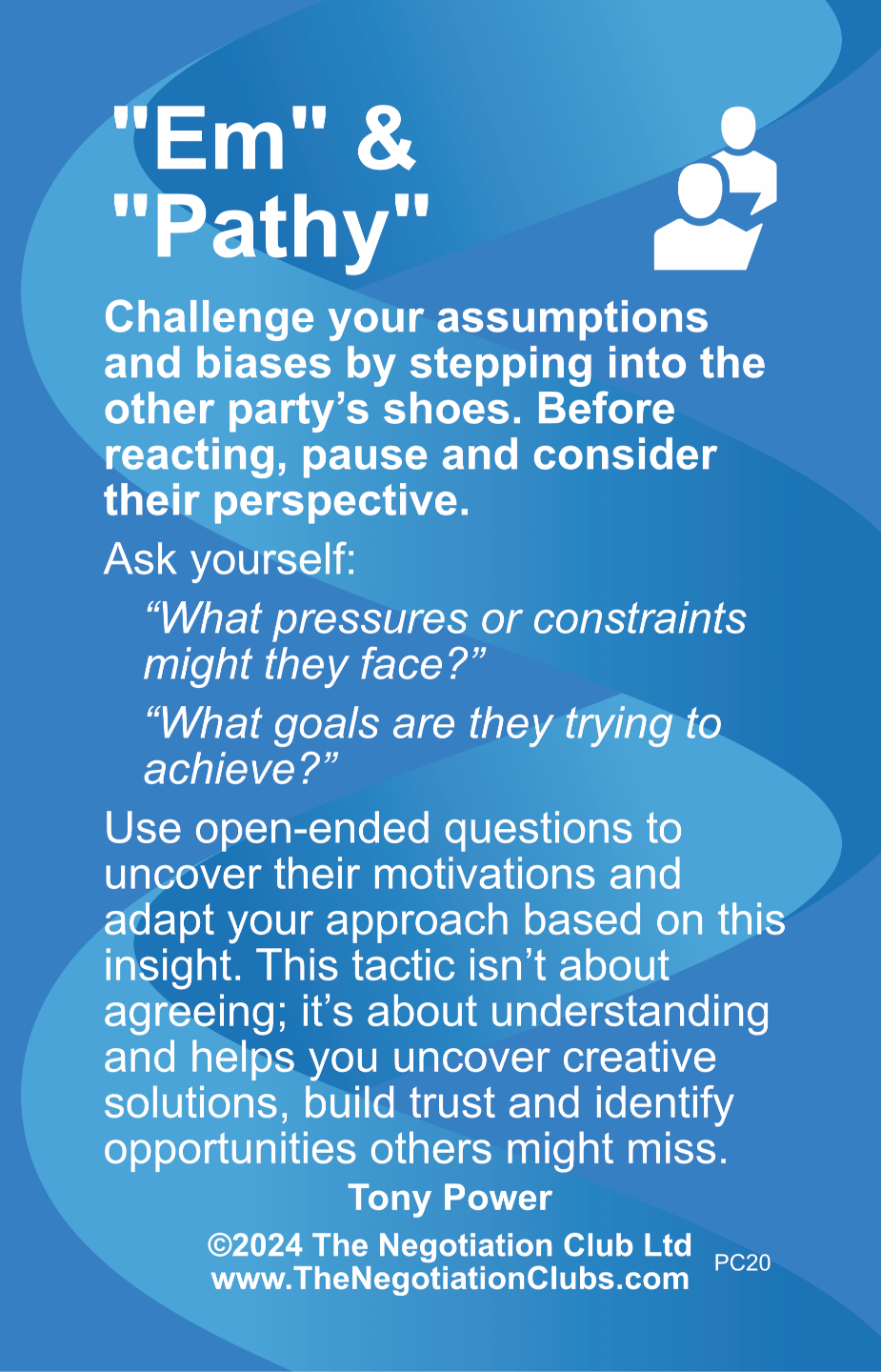
We’re excited to announce the addition of our exclusive Negotiation Club Podcast Negotiation Cards to the Negotiation Tactics page. Inspired by insightful discussions with our podcast guests, these special cards capture real-life experiences and techniques shared by seasoned negotiators. Each card highlights a specific tactic discussed on the podcast, providing practical guidance and examples. Continuously updated with new insights, these cards are an invaluable resource for anyone looking to enhance their negotiation skills with tried-and-true strategies from the experts.

Listen To The LATEST Podcast